
GSRH’s contribution to a global movement for stronger surveillance, sustained recovery and equitable care, connecting research and patient experience in Pakistan with international TBI advocacy.
Pakistan’s voice at SBNS100
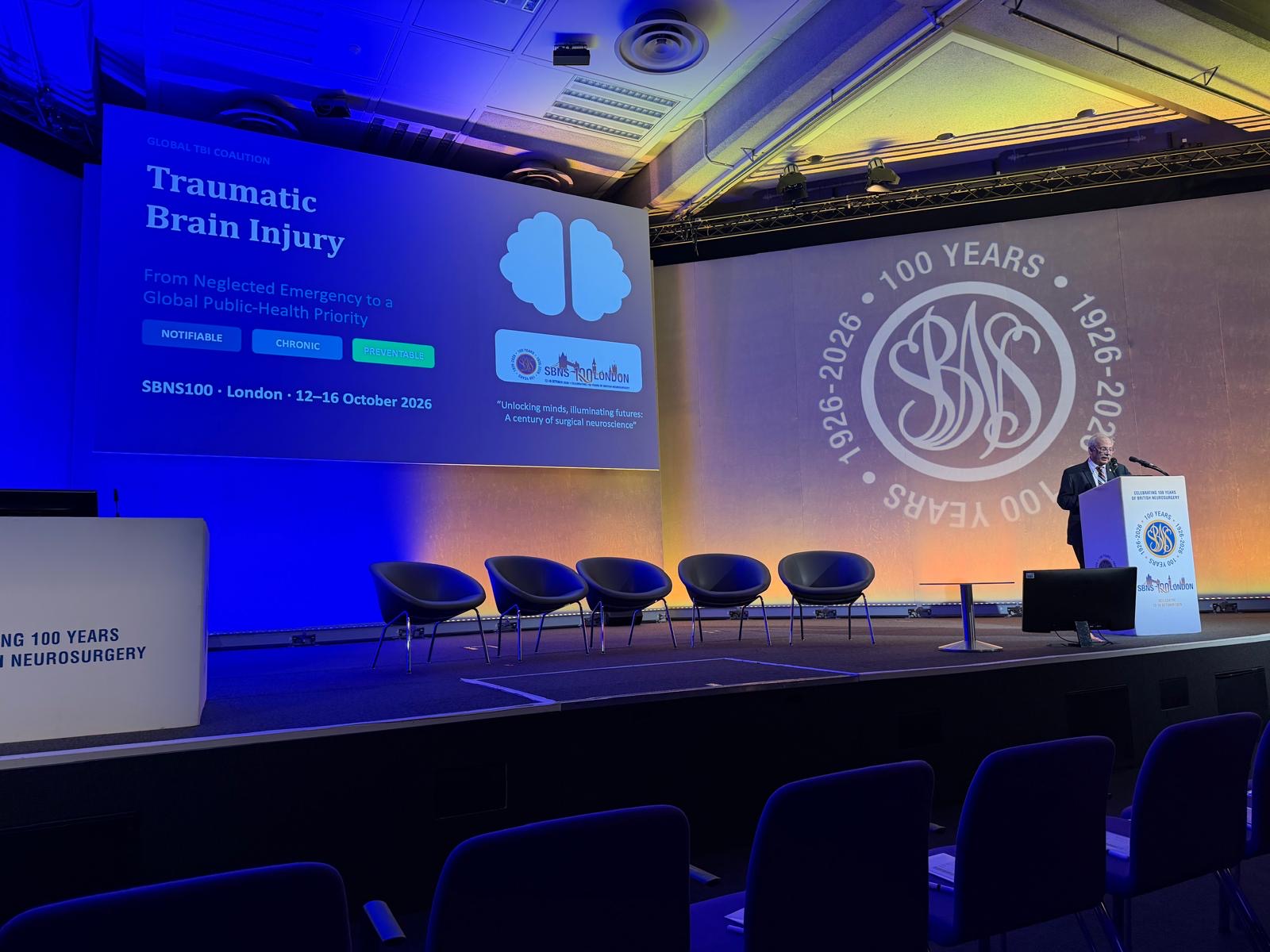
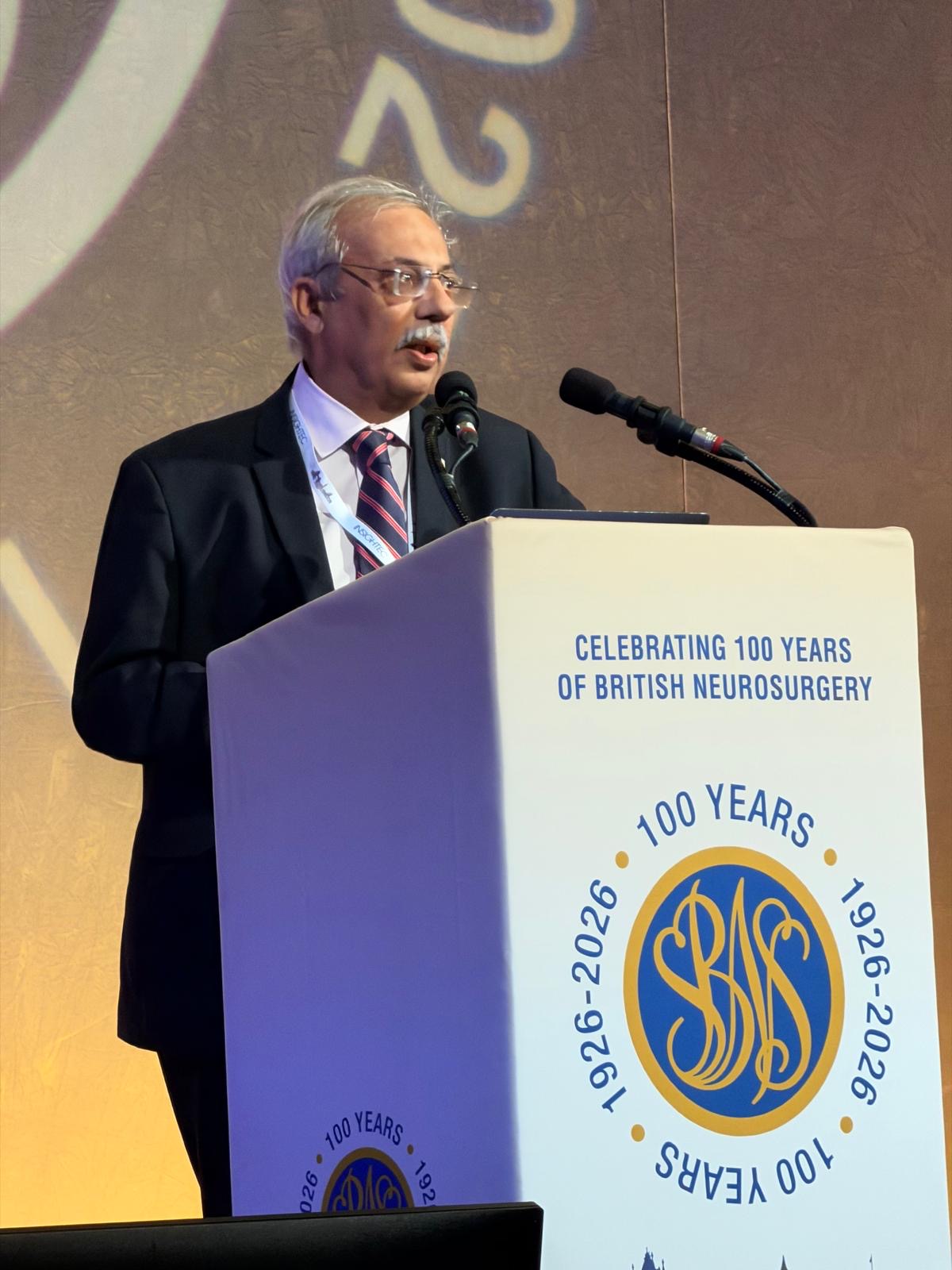
Prof. Muhammad Tariq Khan, Director of GSRH, represented Pakistan at the centenary meeting of the Society of British Neurological Surgeons in London on 13 October 2026. He discussed the proposed resolution on traumatic brain injury (TBI). GSRH connects research and patient experience in Pakistan with the Global Coalition for TBI’s international campaign for recognition, reporting and continuing care. [5]
Care that continues after discharge
The impact of TBI can continue long after the initial injury. Some survivors face persistent difficulties with memory, movement, mood, fatigue and everyday independence. Families may experience years of caregiving and financial strain. [1, 3]
Continuing care and better reporting
Recognizing TBI as a chronic condition acknowledges that its effects may persist or change over time. It supports rehabilitation, follow-up and access to appropriate clinical and psychosocial care. Systematic reporting through national health systems would help identify injury patterns, unmet needs and service gaps. These data can guide prevention and investment, with clear policies to protect patient information.
GSRH connects research with practical change
Registry and clinical data: supporting structured patient data collection to understand injury patterns, care and outcomes.
Follow-up and recovery: examining patients’ needs and outcomes beyond their initial hospital admission.
Neurorehabilitation research: exploring gaps in rehabilitation services and access to continuing care.
Community involvement: bringing patient and caregiver perspectives into research and wider discussions about TBI.
2025 · Our first Geneva advocacy event
WHA78 — 21 May 2025. Convened through the Global Coalition for TBI, the event brought together clinicians, researchers, WHO representatives, policymakers and people with lived experience. It gave this campaign a platform within World Health Assembly discussions and strengthened the call for recognition, reporting and continuing care. Pakistan expressed support for a proposed WHA resolution. [1]
2026 · Member State momentum accelerates
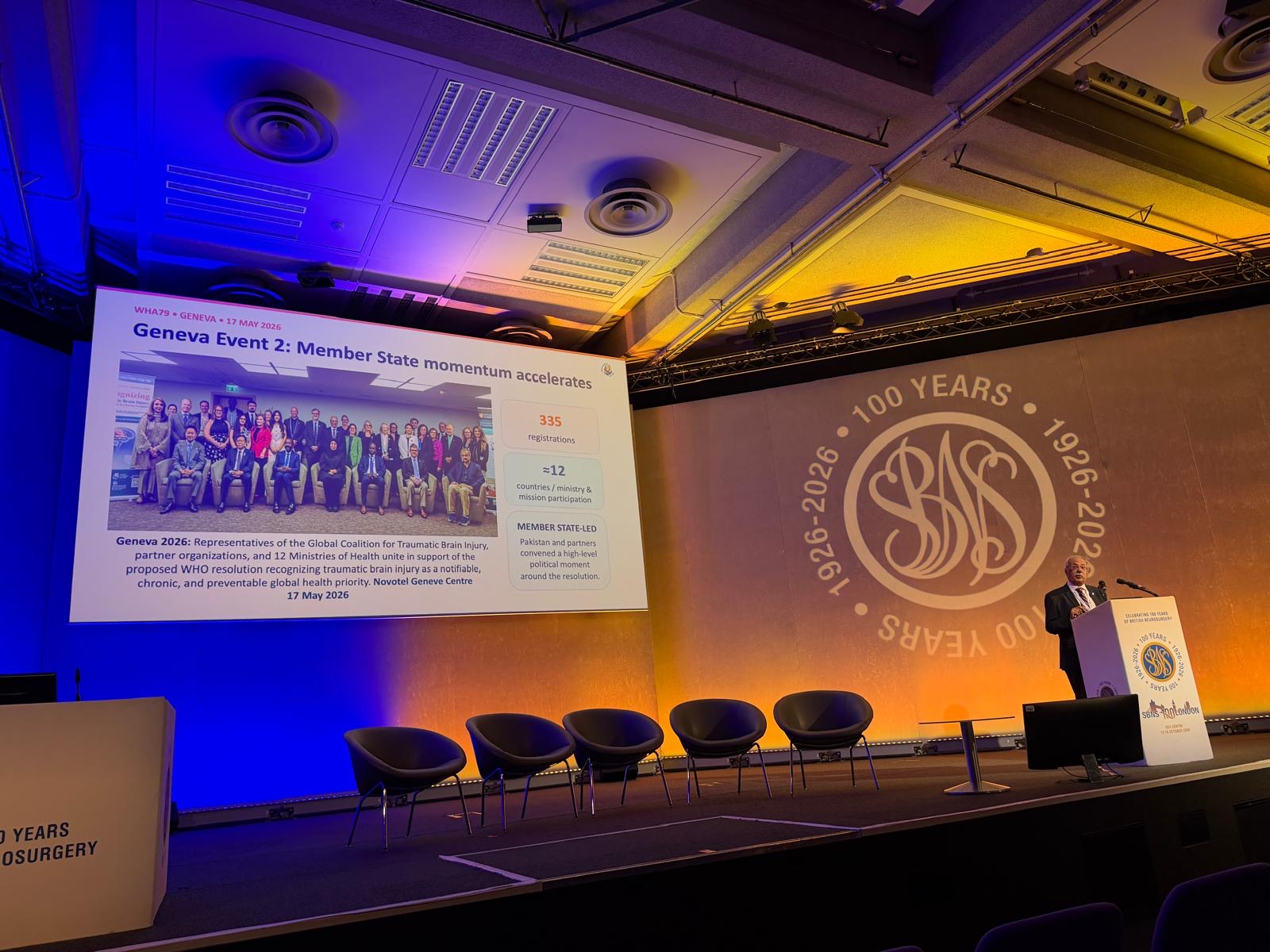
WHA79 — 17 May 2026. The Pakistan-hosted Geneva event brought health ministries and senior political and health leaders together with the Global Coalition for TBI and international partners. Collaboration included Cambridge’s NIHR Global Health Research Group on Acquired Brain and Spine Injury (ABSI). Prof. Tariq Khan co-moderated the Way Forward panel with Dr. Kee Park. [2]
WHA79 Geneva event · 17 May 2026
- Registrations
- 335
- Participating countries
- 12
A collective effort towards WHA80
The Global Coalition for TBI connects clinical societies, researchers, rehabilitation specialists, advocacy organizations and people with lived experience. GSRH contributes to this collective effort alongside partners including ABSI Cambridge, the G4 Alliance and the International Society for Global Neurosurgery. [1, 2]

A preparatory milestone
According to GSRH’s latest update, the proposed TBI resolution has received approval at the pre-Executive Board preparatory stage. This marks progress towards Executive Board consideration and the goal of bringing the proposal before the 80th World Health Assembly in 2027.
Formal consideration and possible adoption by WHO Member States remain ahead. The Executive Board may recommend the proposal or request further consultations. National reporting requirements would depend on subsequent country-level action. [4]
An international research contribution
GSRH researchers and Northwest colleagues contributed to a TBI advocacy commentary published in Brain Sciences in January 2026. Almas F. Khattak, Taskeen Ullah Baber, Yashma Sherwan and Tariq Khan are among its coauthors, documenting the campaign’s rationale and the momentum generated at WHA78. [1]