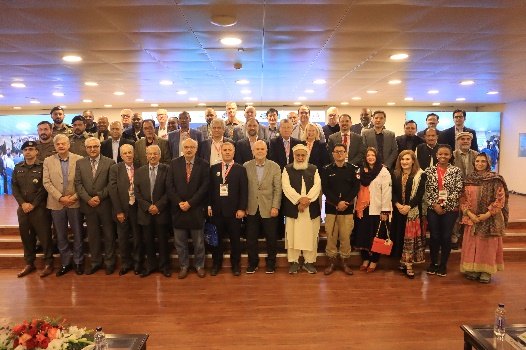
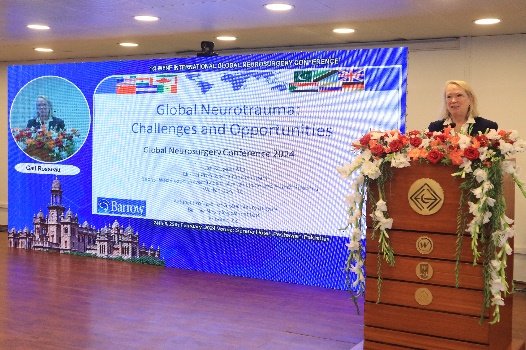
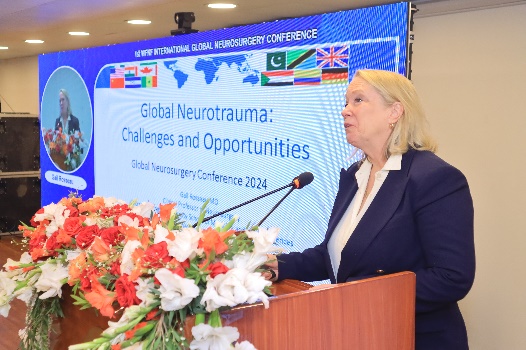
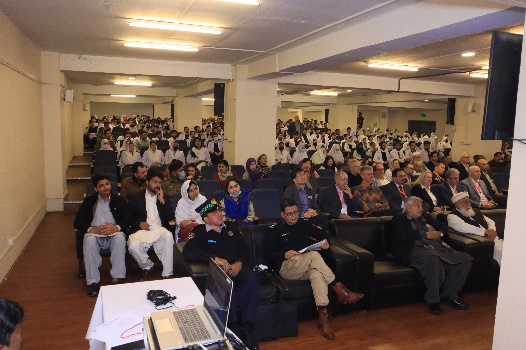
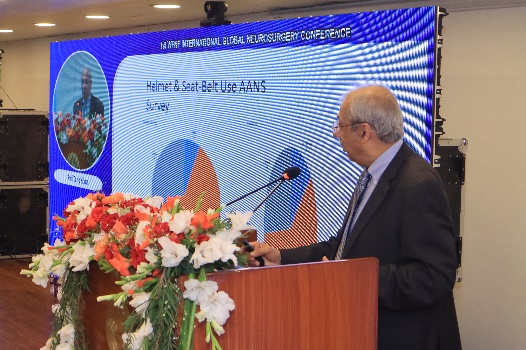
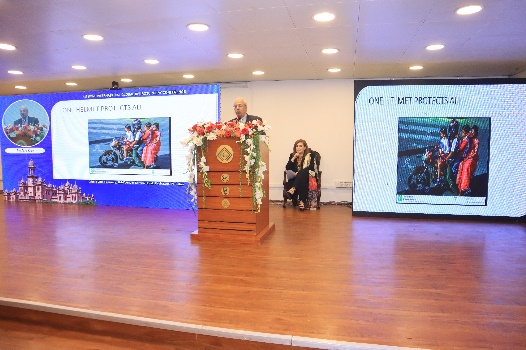
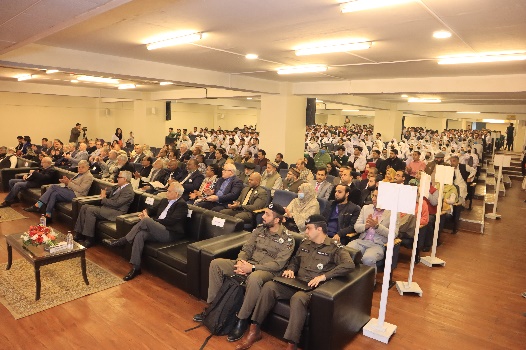
A public-awareness seminar brought neurosurgeons, a person with lived experience of head injury, emergency responders and traffic authorities into the same conversation—shifting the focus from treating neurotrauma to preventing it.
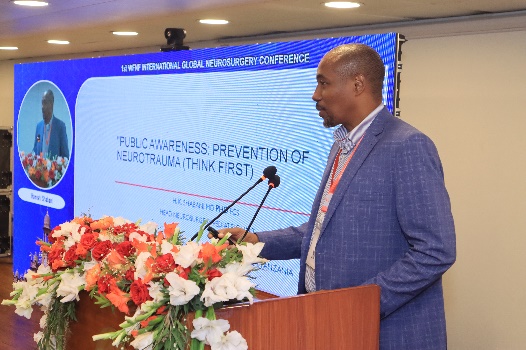
Neurotrauma begins before the hospital
Traumatic brain injury is frequently discussed through the lens of emergency medicine, intensive care and neurosurgery.
Yet by the time a severely injured patient reaches those services, prevention has already failed.
The Neurotrauma Awareness seminar deliberately moved the conversation upstream.
Speakers addressed the causes of neurotrauma alongside practical prevention, while participation from a head-injury patient, Traffic Police and Rescue 1122 brought perspectives from outside the operating theatre.
That multidisciplinary framing is particularly important for global surgery because the burden of injury cannot be addressed by expanding surgical capacity alone.
Bringing prevention into the clinical conversation
Prof. Tariq Khan, Prof. Hamishi Shabani, Prof. Gail Rosseau and Prof. Franco Servadei were among the speakers addressing neurotrauma prevention.
The discussion highlighted road-traffic injury as a major contributor to neurotrauma and addressed practical measures including helmet use, compliance with traffic laws, valid driving licences and speed control.
These may appear simple compared with advanced neurosurgical technology, but prevention at population level can influence the number and severity of injuries that ultimately require specialist care.
The importance of lived experience
A particularly valuable part of the programme was the contribution of a person who had experienced head injury.
That voice changes the tone of an awareness event.
Clinical presentations explain mechanisms, treatment and systems. Lived experience shows what trauma means for the individual and family beyond those clinical definitions.
The WFNS report specifically notes the inclusion of a head-injury patient in the public-awareness session.
Prevention requires partners beyond healthcare
The involvement of SSP Traffic Police Peshawar Arshad Khan and District Emergency Officer Rescue 1122 Rafiullah Khan Marwat expanded the seminar beyond the traditional medical audience.
This is one of the most important aspects of the event.
Neurosurgeons can treat traumatic brain injuries.
They cannot alone design safer roads, enforce speed limits, regulate licensing, encourage helmet use or build pre-hospital response systems.
Reducing neurotrauma therefore requires cooperation across healthcare, emergency response, public policy, transport systems and communities.
Moving global surgery upstream
This event demonstrates that global surgery can have a role before surgery is ever needed.
Preventing severe injury can reduce mortality, disability, family hardship and pressure on already constrained surgical systems.
The most mature surgical systems therefore do not choose between treatment and prevention.
They invest in both.
Some of the most important interventions in neurotrauma happen before a patient reaches the hospital.
- 1.Protect: helmet use
- 2.Prevent: responsible driving, licensing and speed control
- 3.Respond: effective emergency services and timely trauma care
View programme photographs (7)